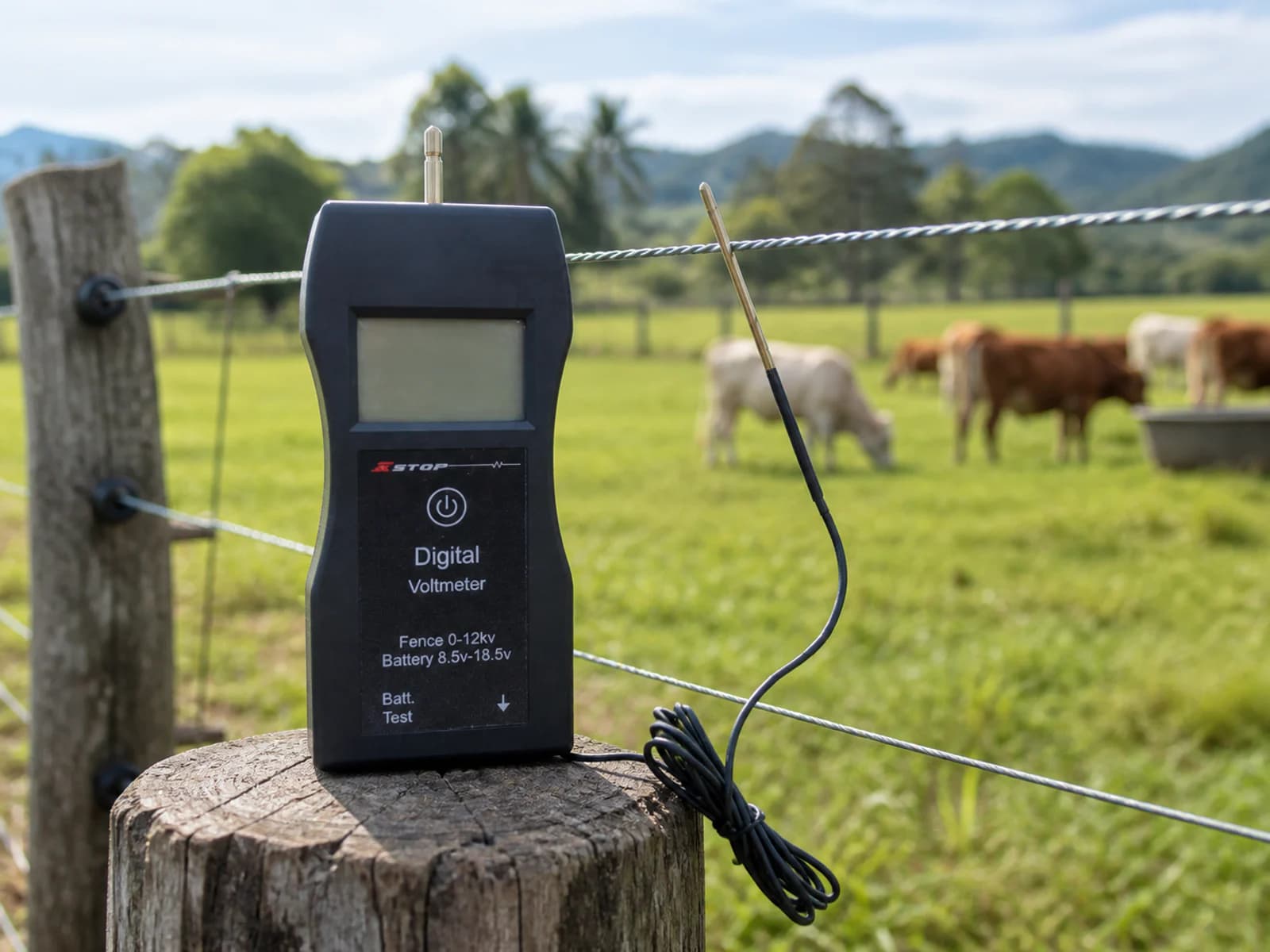
Voltage testers and fault finders for checking energizer output, diagnosing weak spots, and confirming a fence is working before you rely on it.
Choose a tester by measurement range, display style and whether you need voltage-only checks or fault-finding functions. Test at the energizer and at points along the fence.
Technical guidance from Pang Electronics. Purchasing happens in PE Mall Store.
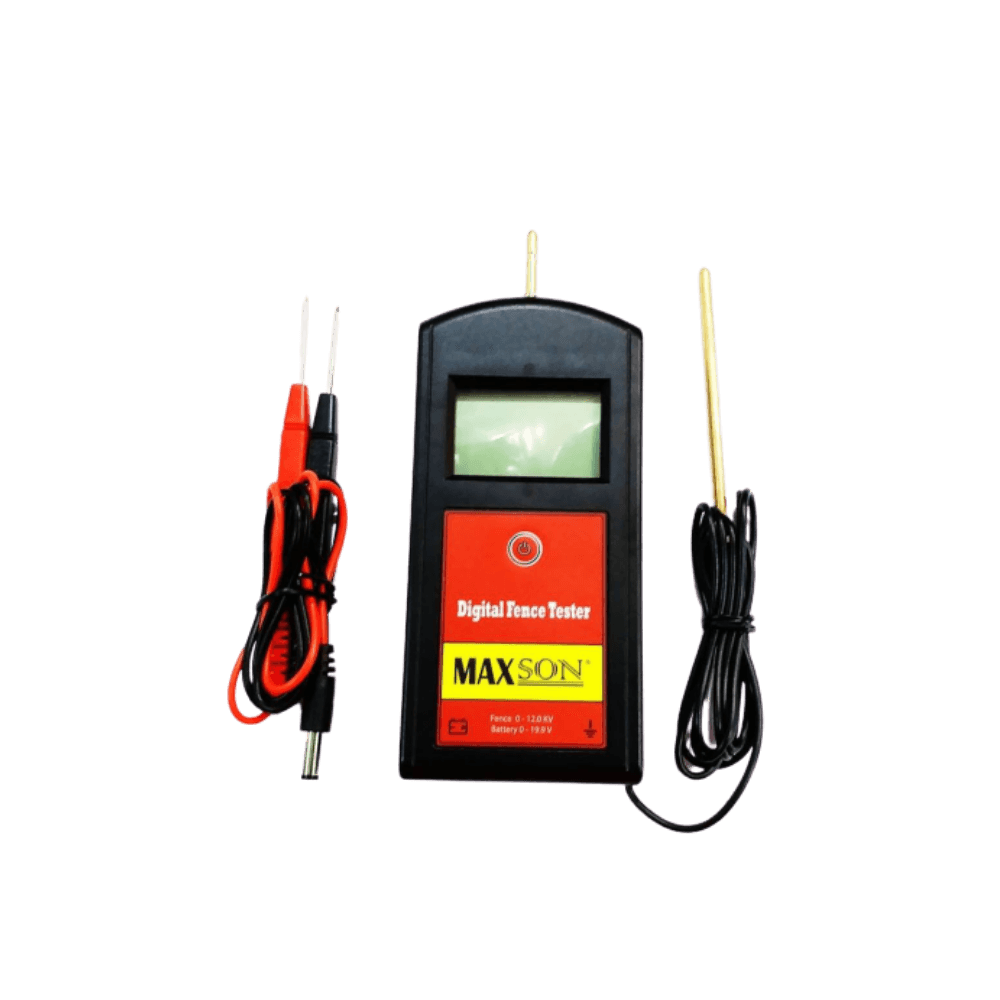
Check electric fence and battery voltage with the portable MAXSON digital tester. Automatic pulse detection switches the display on, with automatic shutoff after approximately four seconds without a pulse.
Technical details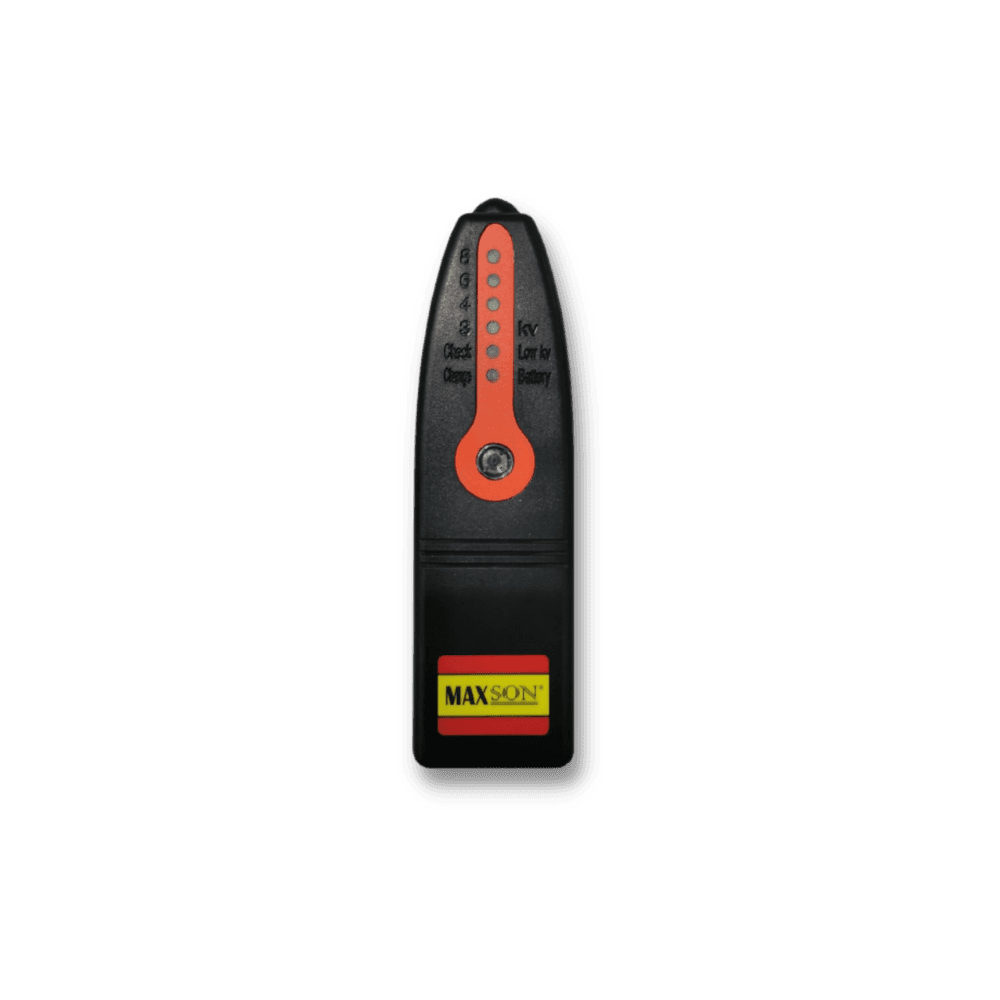
Check electric fence voltage levels with the MAXSON MT95 sensor tester. LED indicators provide a quick visual check without a separate grounding probe.
A fence tester reads the voltage on the live wire, letting you confirm the energizer is putting out a strong pulse and that the wire is carrying it effectively all the way around the perimeter — rather than guessing from whether the fence "feels" like it's working.
Voltage naturally drops with distance, vegetation contact, and any point where the wire touches an uninsulated post or the ground. A tester lets you check output near the energizer and again at the far end of a long run, which quickly shows whether a fault or heavy leakage is cutting your effective coverage well short of the fence's full length. This is especially useful after storms, after cutting back vegetation, or as a routine seasonal check — see the maintenance guide for a full checklist.
Simple neon or LED indicator testers give a rough go/no-go reading, while digital voltmeter-style testers give an exact kilovolt reading, useful for tracking performance over time or diagnosing a specific weak section by testing at intervals along the line.
Keep a tester on hand alongside your energizer and accessories — it's inexpensive relative to the cost of running an underperforming fence without knowing it.
A tester confirms fence voltage and helps locate voltage loss caused by poor connections, vegetation or earthing problems.
Test at the energizer first, then at several points along the fence to identify where voltage begins to fall.
Test after installation, repairs, storms and whenever animals escape or the fence appears weak.
A basic voltage tester confirms the reading; a fault finder or current meter can help locate losses along the fence.