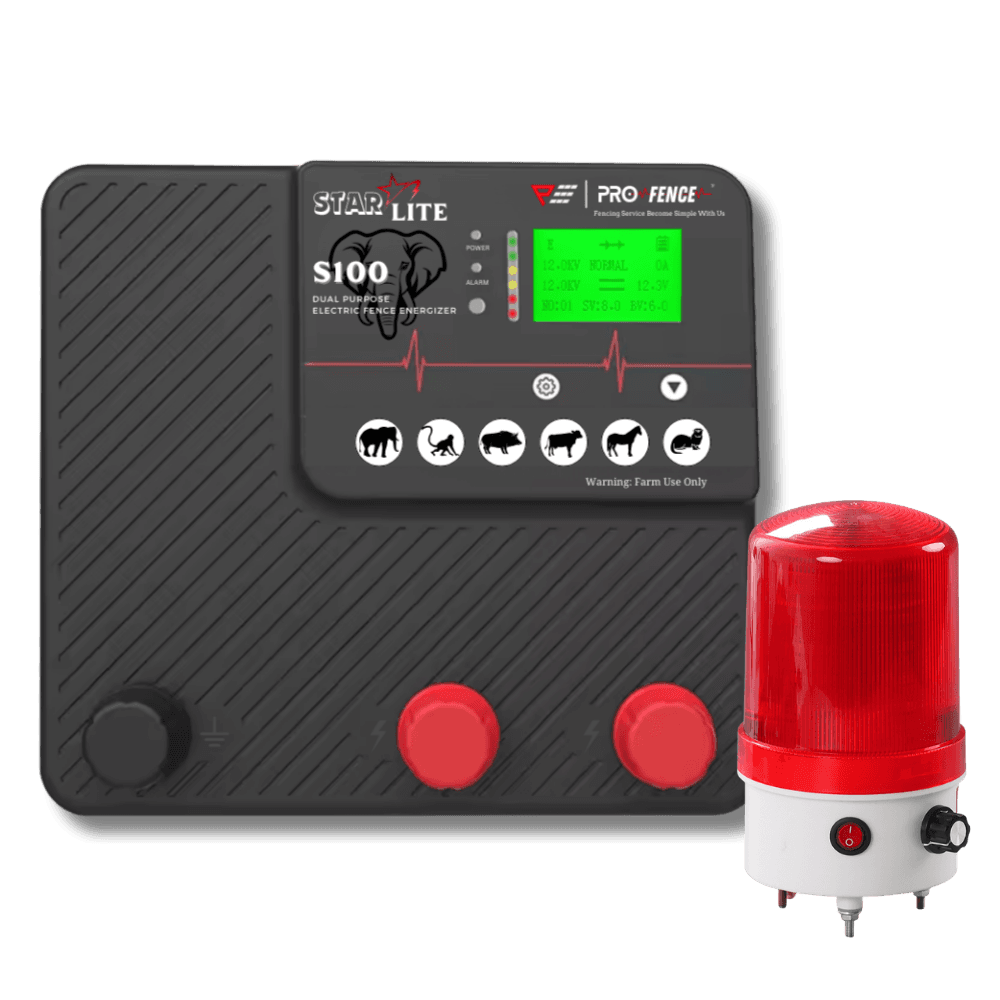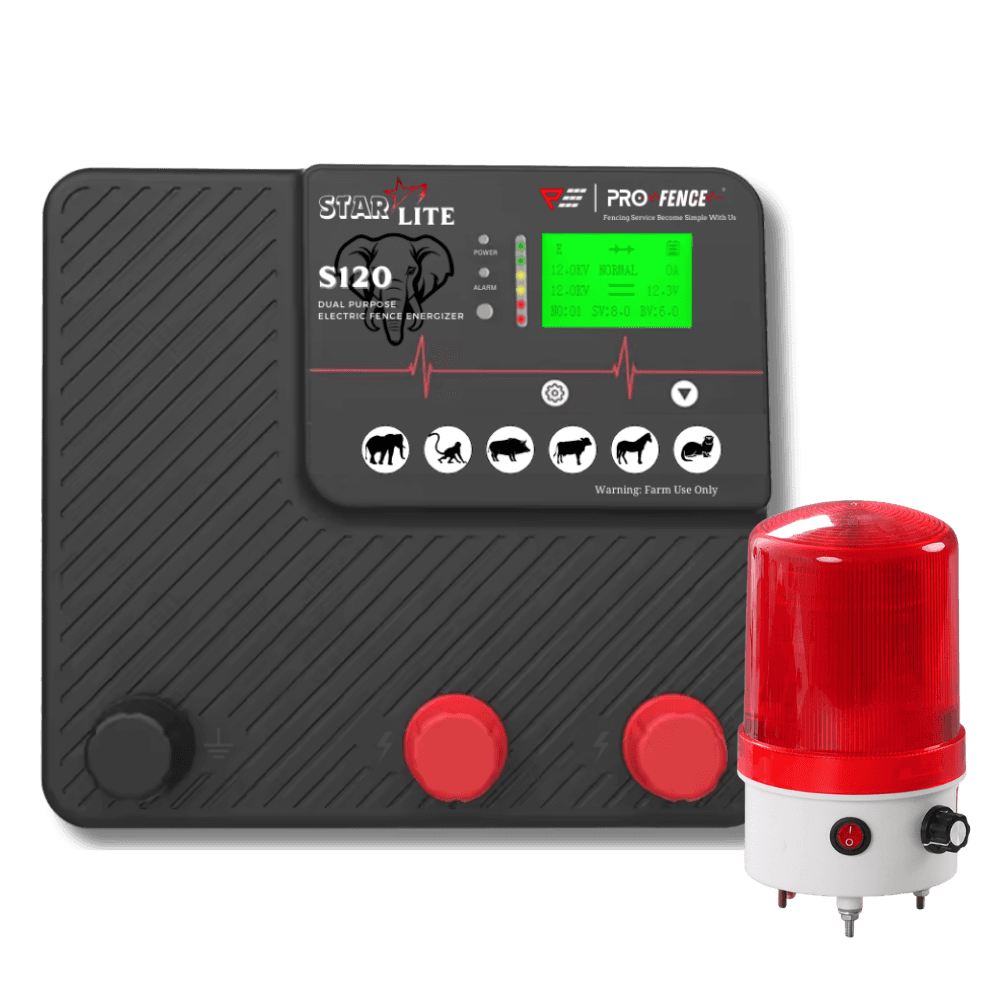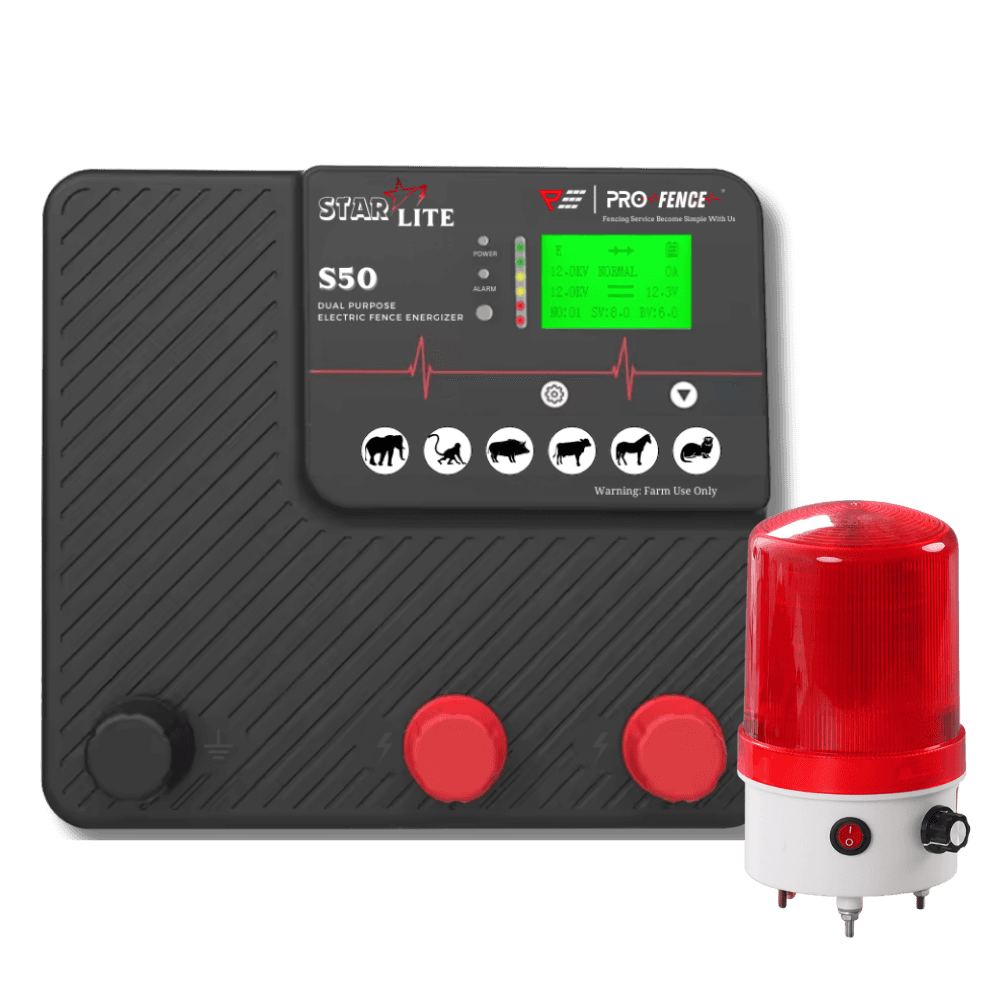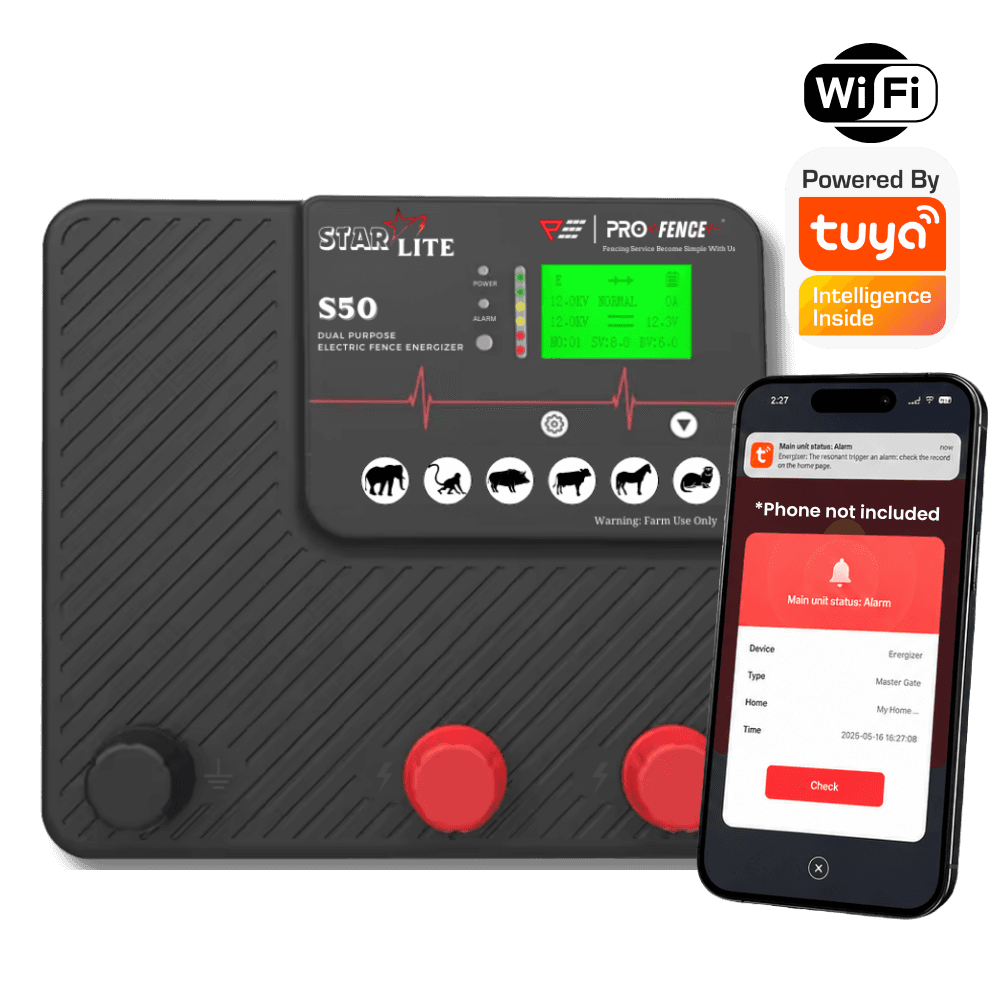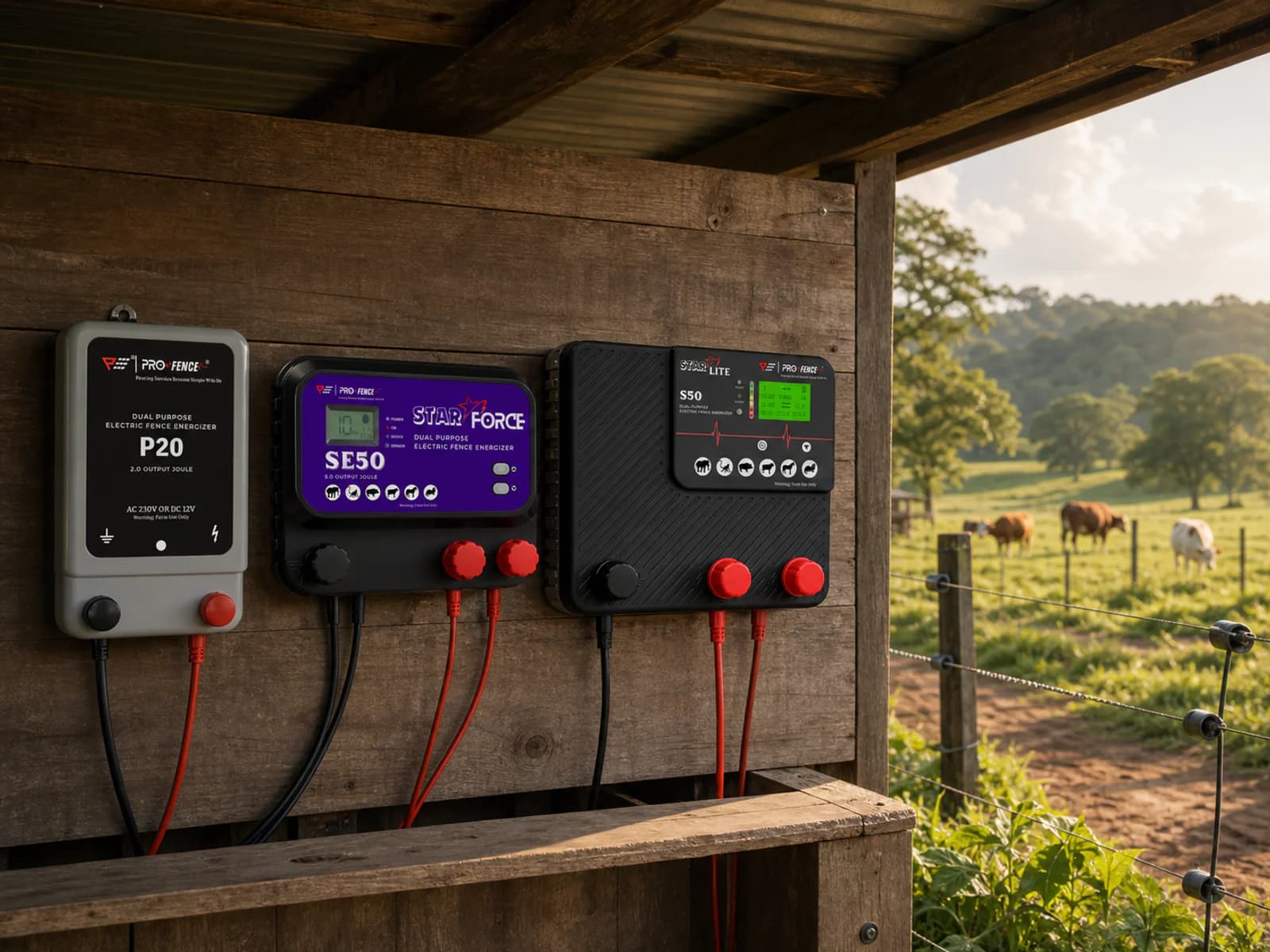
The energizer is the heart of every electric fence system — it turns mains, battery, or solar power into the short, high-voltage pulses that deter animals safely. Browse mains, battery, and solar models sized for smallholdings through to full plantation perimeters.
Match output energy to fence length, number of strands, vegetation load and animal type. Then choose mains, 12 V battery or solar power based on the installation location.
Technical guidance from Pang Electronics. Purchasing happens in PE Mall Store.

4.8 J output Mammoth XP DC energizer for large farm and elephant-deterrent fencing up to 3,000 m × 3 lines stated. Power: AC Adapter · 12 V Battery · Solar Compatible.
Technical details
Maxson M10 12 V energizer with 1.1 J maximum output energy and 6 km maximum working distance. Power: AC Adapter · 12 V Battery · Solar Compatible.
Technical detailsAn energizer (also called a fence charger) takes power from a mains supply, a 12V battery, or a solar panel and converts it into a pulsed high-voltage output, sent along the fence wire roughly once per second. That pulsed design — rather than a continuous current — is what makes an electric fence shock startling and memorable to an animal without being dangerous.
The right energizer depends on three things: how long your fence line is, how many wire strands you're running, and how much vegetation load the fence carries (green vegetation touching a live wire bleeds off charge, so a longer or weedier line needs more joules to stay effective). As a rough starting point, small paddocks and short boundaries need less output than multi-kilometre plantation perimeters or wildlife-deterrent fences aimed at wild boar or elephants.
Use the energizer sizing tool to get a joule recommendation from your fence length and animal type, or read How Many Joules Do I Need? for the full explanation.
An energizer alone doesn't make a working fence — it needs fence wire, insulators to keep the live wire off posts, and a proper earthing kit to complete the circuit. A fence tester is worth keeping on hand to confirm output after installation and during routine checks.
Explore energizers from Pro Fence, StarLite, StarForce, and our authorised dealer brands on the Brand Centre, or jump straight into Quick Order to build a matched system from your fence length and application.
Check the power source, fence condition and earthing before replacing an energizer or choosing a larger model.
Choose an energizer by fence length, number of wire strands, vegetation load, target animal and available power source.
It converts mains, battery or solar power into short high-voltage pulses sent along the fence conductor.
Choose output energy according to fence length, number of strands, vegetation load and the animal being controlled. Manufacturer coverage figures are guides and real performance depends on fence condition.
Common causes include vegetation touching the wire, poor connections, damaged insulators, insufficient earthing or a battery that needs charging.
Some energizers can run from a 12 V battery charged by a solar panel and controller. Confirm that the energizer, battery and controller ratings are compatible.
Discontinued models kept for reference and spare-part guidance.
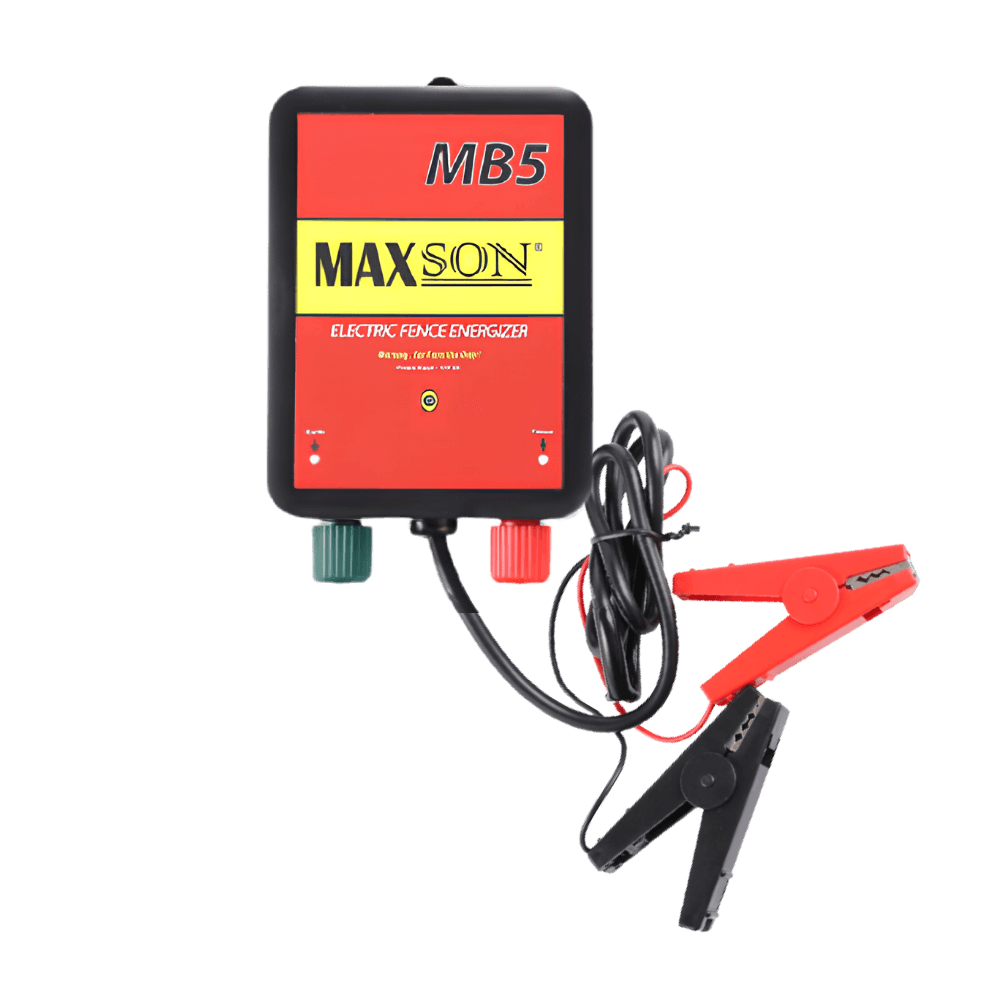
0.5 J battery-powered energizer with 9.5 kV peak voltage and 5 km stated maximum fence distance. Power: AC Adapter · 12 V Battery · Solar Compatible.
Technical details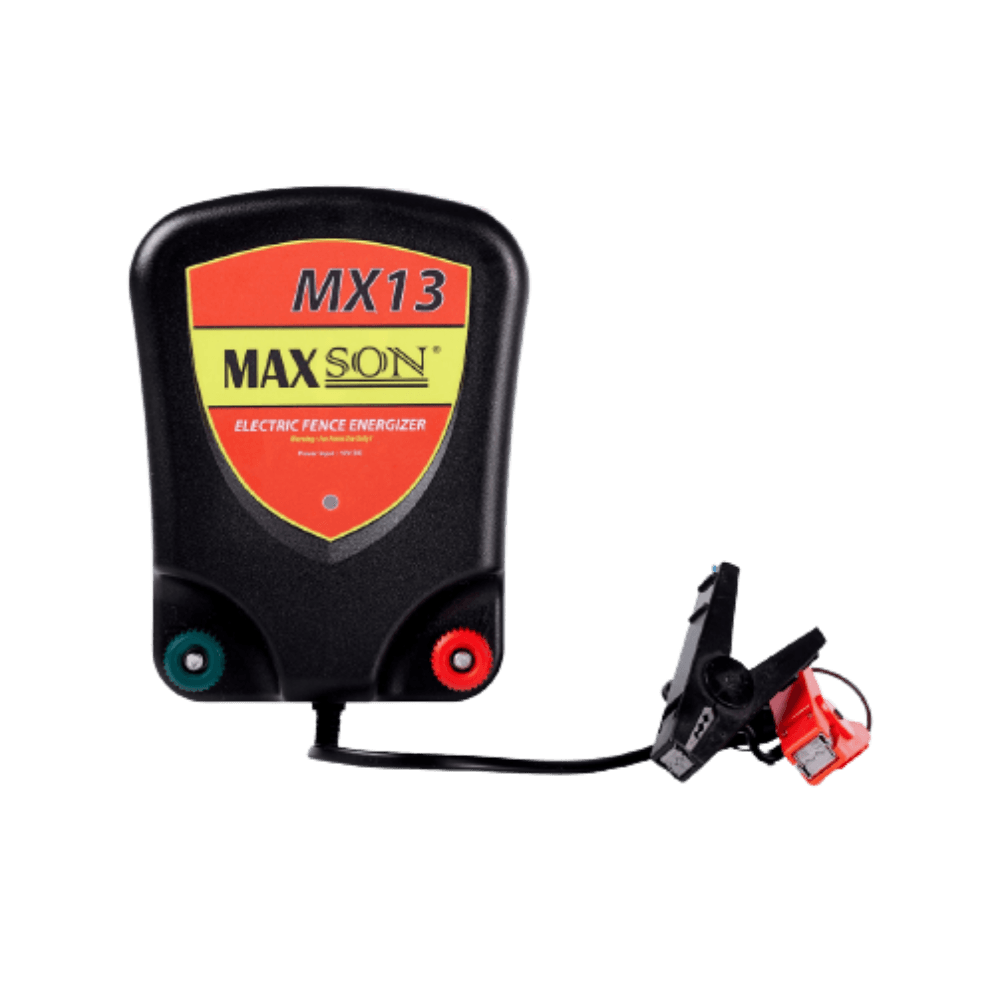
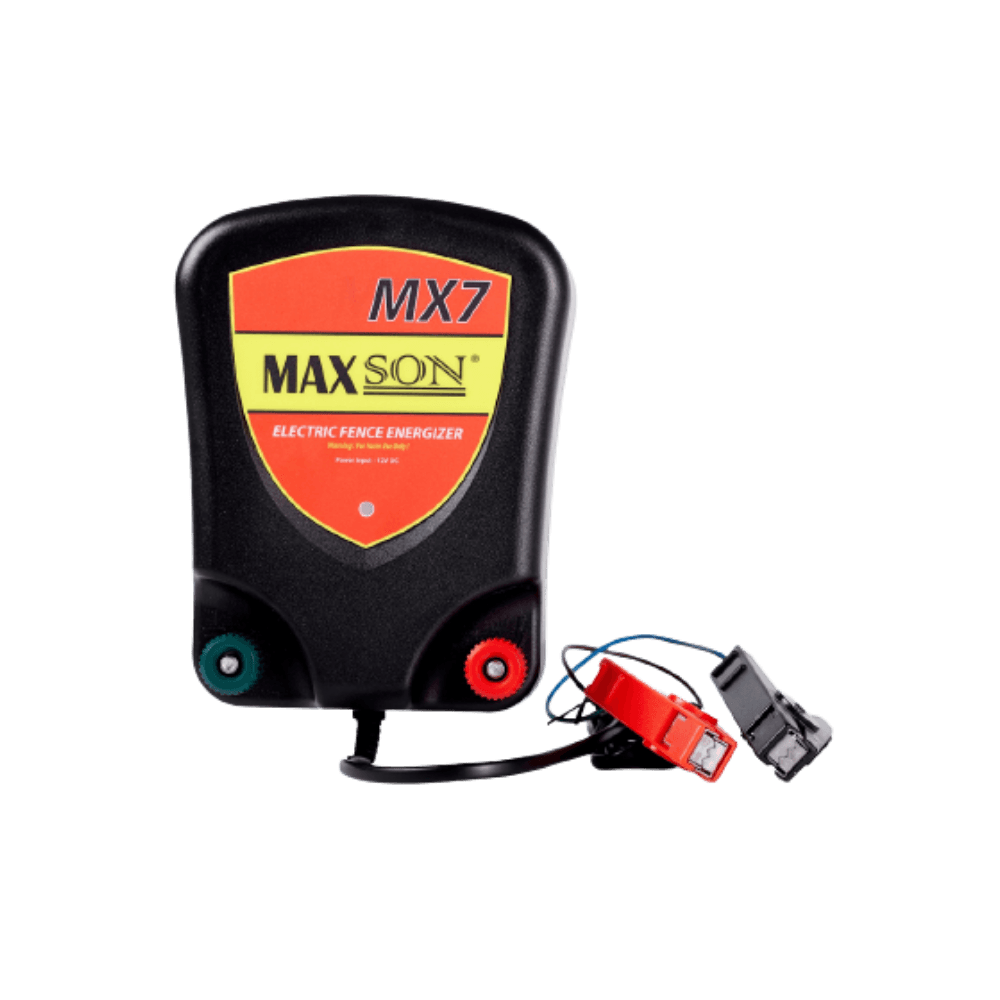

2.5 J PapaStop energizer for below 7 acres × 3 lines with 12 v or 110–240 v uk adapter operation. Power: AC Adapter · 12 V Battery · Solar Compatible.
Technical details
3.5 J PapaStop energizer for below 15 acres × 3 lines with 12 v or 110–240 v uk adapter operation. Power: AC Adapter · 12 V Battery · Solar Compatible.
Technical details
5.5 J PapaStop energizer for below 50 acres × 3 lines with 12 v or 110–240 v uk adapter operation. Power: AC Adapter · 12 V Battery · Solar Compatible.
Technical details
1.0 J PapaStop energizer for below 4 acres × 3 lines with 12 v or 110–240 v uk adapter operation. Power: AC Adapter · 12 V Battery · Solar Compatible.
Technical details
0.5 J PapaStop energizer for below 2 acres × 3 lines with 12 v or 110–240 v uk adapter operation. Power: AC Adapter · 12 V Battery · Solar Compatible.
Technical details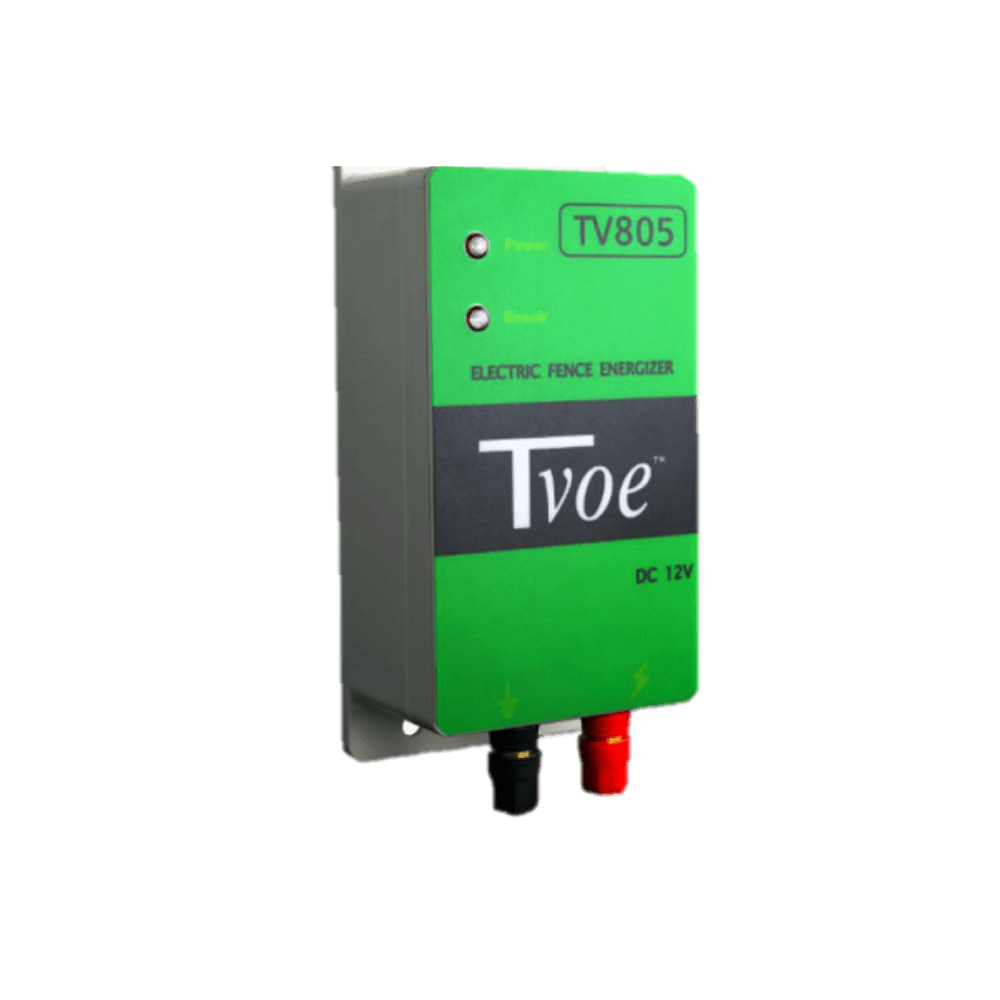
0.5 J Tvoe AC Mains Via Included Adapter / 12 V DC Battery energizer for approximately 1–2 acres with three fence lines. Power: AC Adapter · 12 V Battery · Solar Compatible.
Technical details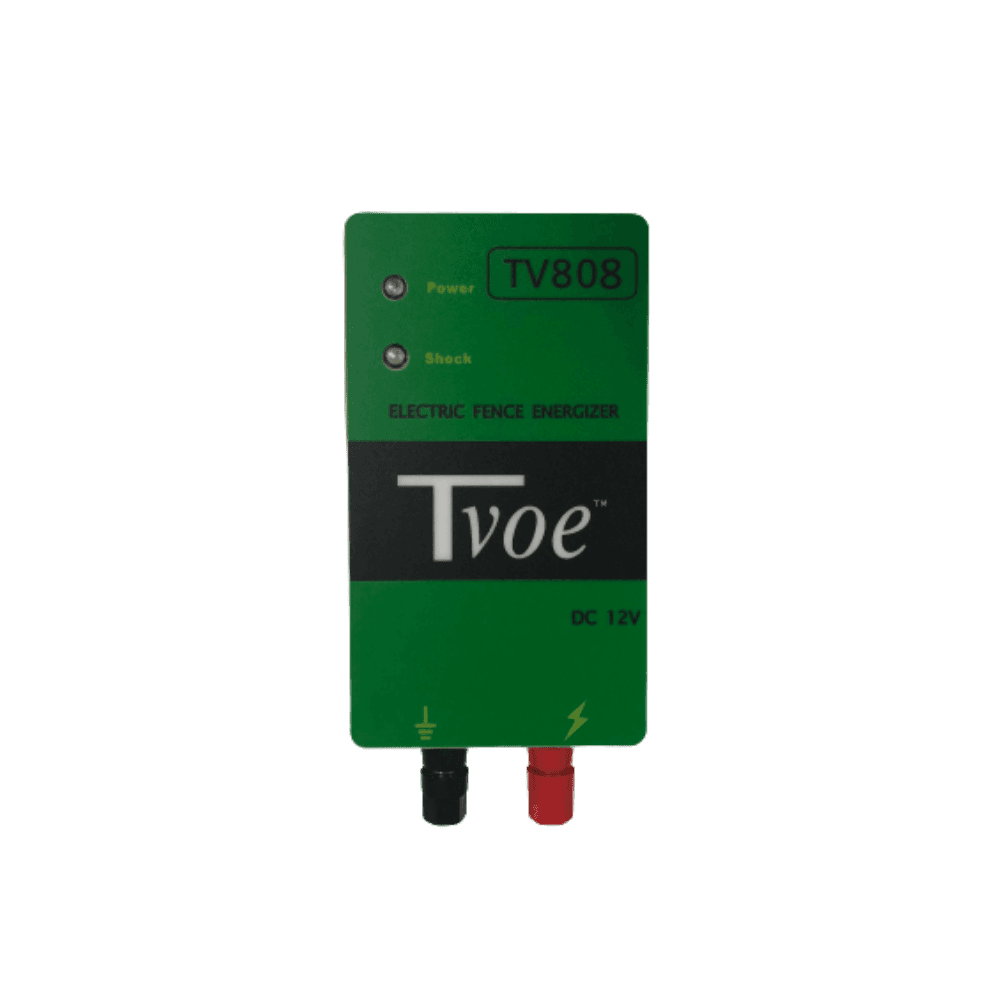
0.8 J Tvoe AC Mains Via Included Adapter / 12 V DC Battery energizer for approximately 1–2 acres with three fence lines. Power: AC Adapter · 12 V Battery · Solar Compatible.
Technical detailsWalk the fence regularly, clear vegetation, check for broken or loose wire, inspect insulators and test voltage after storms or repairs.
A compliant energizer is designed to deliver short, spaced pulses rather than continuous current, so a brief contact is normally painful and startling rather than fatal. However, an electric fence can still cause serious injury or death in unusual circumstances, especially for people with heart conditions, children, anyone who becomes trapped, or when the system is incorrectly installed or modified. Keep people away, use warning signs and follow the energizer manual and local safety requirements.
A correctly selected and installed livestock fence is intended to deter animals, not kill them. Animals can still be injured or killed if they become entangled, remain in contact with the wire, are exposed to an unsuitable energizer, or the fence is used for a species or situation it was not designed for. Inspect the fence regularly and provide a safe escape route.
Do not deliberately touch an energised fence. Even a short pulse can be painful, cause a fall or create a medical emergency. Switch off the energizer before maintenance and keep gates, public paths and warning signs clearly managed.
Use a compliant energizer, proper insulation and earthing, visible warning signs where people may approach, and a non-electrified crossing or gate at public access points. Keep the fence clear of vegetation and never connect it directly to mains power.
Take extra care near ponds, drains, narrow gaps and areas where an animal could become caught. Reposition the fence or add a physical barrier so a person or animal cannot remain in contact with the conductor.
Switch the energizer off before inspecting connections. Confirm the power source is connected, the adapter is supplying the correct voltage, or the 12 V battery is charged and connected with the correct polarity. Then check the fence output terminal, earth connection, isolators and any cut-out switch.
Check the adapter input and output rating, plug and fuse where fitted. For battery operation, measure the battery voltage, clean and tighten the terminals, confirm polarity and try a known-good charged battery. Do not substitute an adapter or battery with an unapproved voltage.
A low reading is commonly caused by grass or branches touching the wire, a broken or loose conductor, damaged insulators, poor joints, a shorted gate or an inadequate earth system. Test at the energizer first, then work along the fence to find where voltage falls.
Not immediately. First remove vegetation, repair broken wires and insulators, check connections and improve the earth system. A larger energizer cannot correct a short circuit, poor earthing or a damaged fence. Upgrade only after the fence is in good condition and the required output has been recalculated.
Check the actual fence voltage at the point being crossed, wire height and spacing, vegetation load, earth performance and whether the animal can go under, over or around the fence. Wildlife fencing may require a different layout, more visible conductors, additional strands or a suitable higher-output energizer after the fence fault is resolved.
Walk the fence with a suitable tester and check joints, gate handles, underground cable, insulators and vegetation. A voltage drop that increases with distance usually indicates a fault or excessive load along the fence, rather than automatically meaning the energizer is too small.
Confirm the energizer is designed for 12 V DC, check battery voltage under load and use a battery with enough capacity for the expected operating time. Solar systems also need a correctly matched panel and charge controller.
Contact support after checking the adapter or battery, polarity, output and earth connections, vegetation, wire breaks, insulators and gates. Include the energizer model, power source, tester readings at the energizer and fence end, and photos of the wiring so the fault can be diagnosed faster.