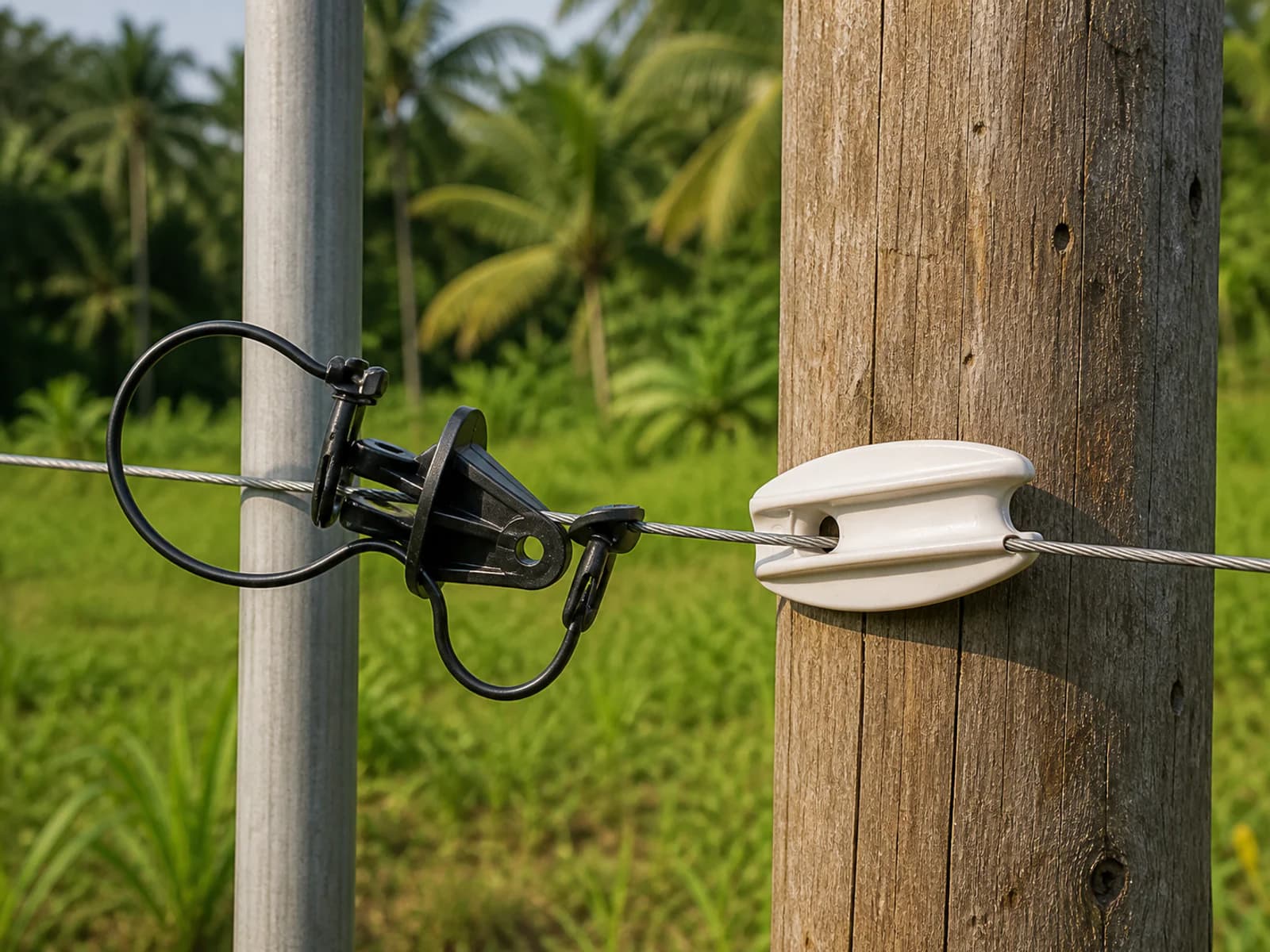
Insulators hold the live wire away from the post itself — without them, a wire touching a wet timber or steel post leaks most of its charge into the ground instead of around the fence line.
Choose an insulator that matches the post material, conductor type and mounting method. Outdoor installations need suitable UV and weather resistance.
Technical guidance from Pang Electronics. Purchasing happens in PE Mall Store.

Ceramic Terminal Insulator for wire termination at end and corner posts in compatible electric-fence systems.
Technical details
Double Hook (Bolt&Nut) Insulator for supporting and connecting electric-fence wire or fence components in compatible electric-fence systems.
Technical detailsInsulators clip or thread onto fence posts and keep the live wire physically isolated from the post. This matters because posts — especially wet timber or any steel post — conduct electricity; a wire resting directly against one bleeds charge into the ground at that point rather than carrying it around the full perimeter, which is one of the most common causes of a "weak" fence that otherwise has a perfectly good energizer.
Insulator choice depends mainly on post material and wire type:
Line posts are typically spaced every few metres with a single insulator per wire height; corner and strainer posts, which take more load, usually need a heavier-duty insulator rated for the extra tension. If a fence tests weaker than expected, checking for insulators cracked by UV exposure or wire resting directly on a post is one of the first things worth doing — see the maintenance guide for a fuller checklist.
Pair insulators with fence wire, posts, and an energizer sized to your perimeter, or use Quick Order to get a matched parts list from your fence length.
Insulators keep the live conductor electrically separate from the post so the energizer pulse remains on the fence wire.
The live conductor may leak energy into the post, reducing voltage and increasing the risk of a fence fault.
No. Select an insulator designed for the post material, wire type and mounting method.