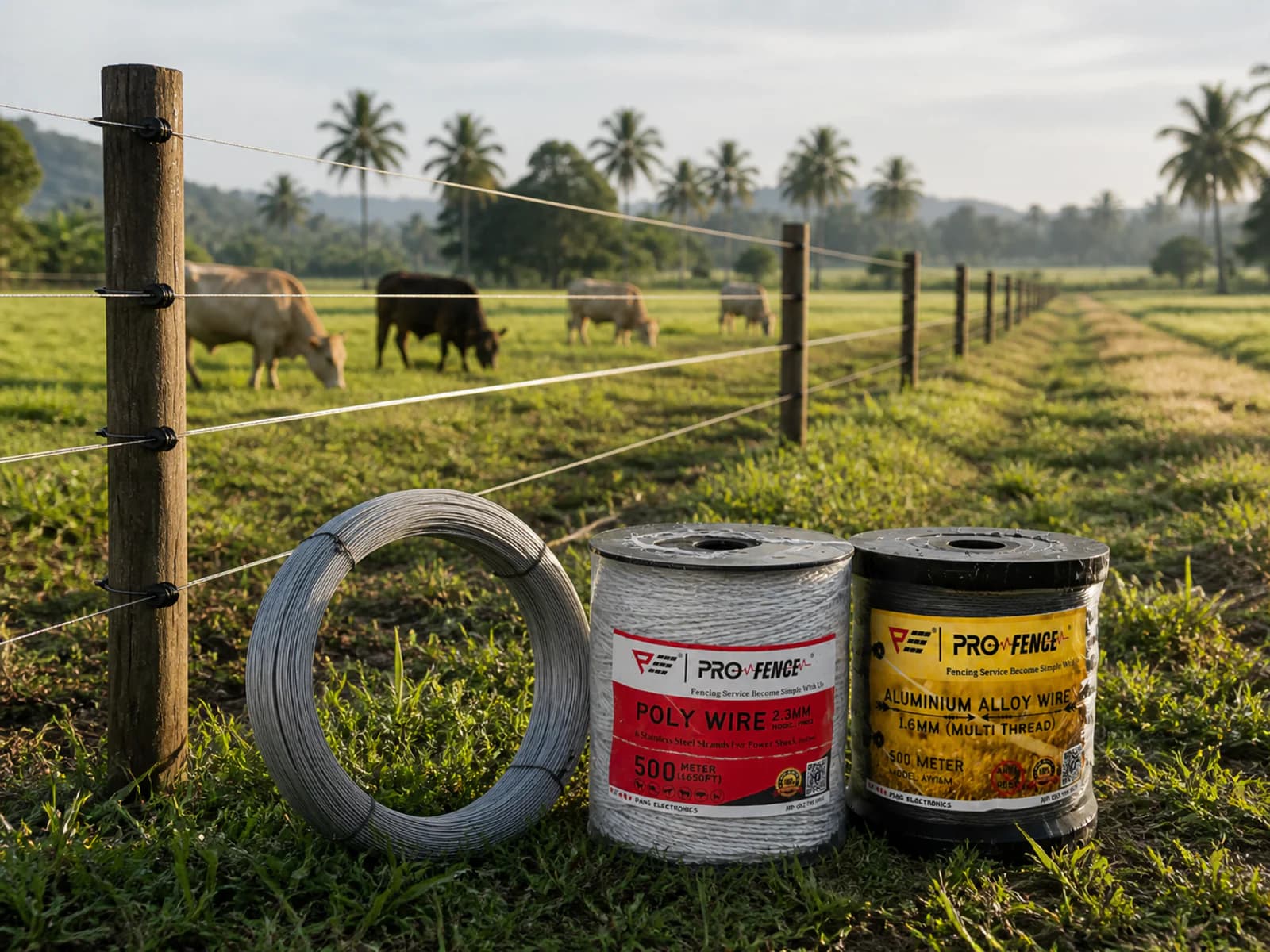
The conductor that carries the pulse around your perimeter — galvanised wire, high-tensile wire, polywire, and polytape, chosen by visibility, distance, and budget.
Choose conductor type and diameter for the fence length, visibility, mechanical strength and required tension. Use compatible connectors and keep the live conductor insulated from posts.
Technical guidance from Pang Electronics. Purchasing happens in PE Mall Store.

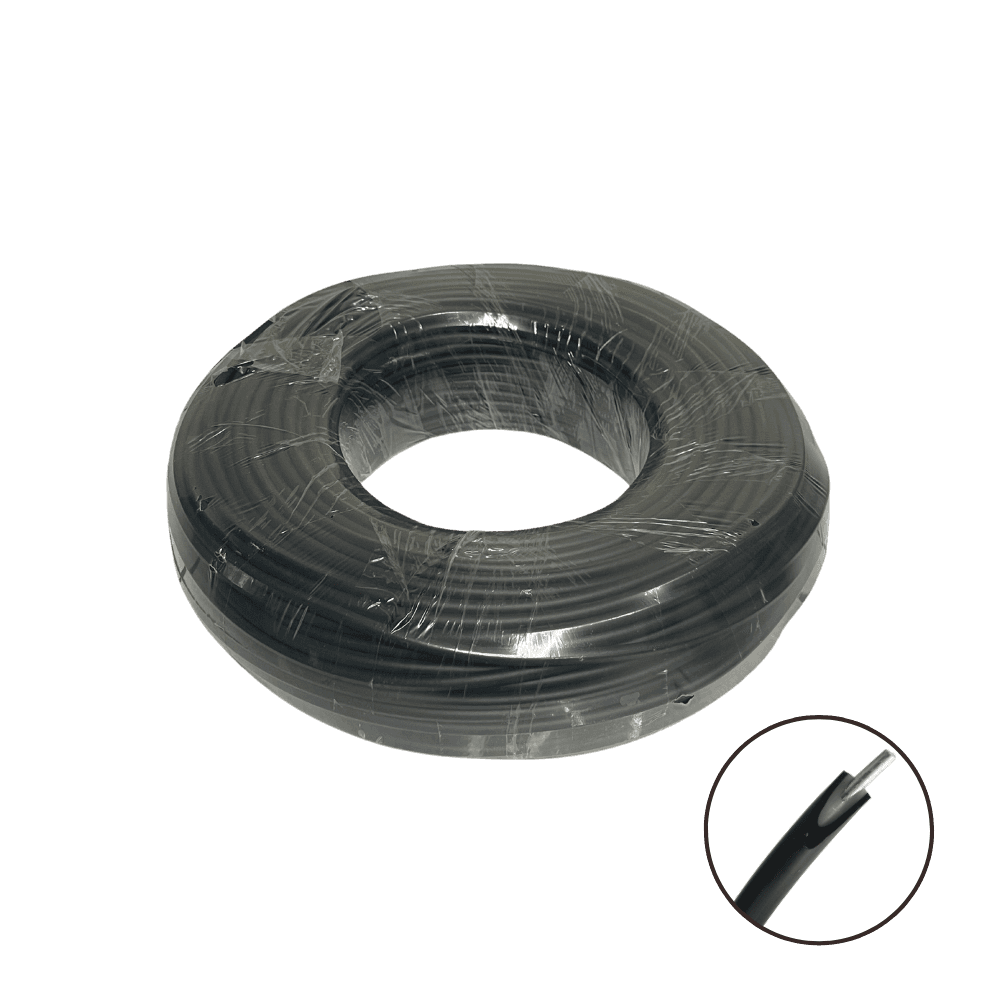
1.6 mm single-strand underground cable in a 50 m roll for insulated electric fence connections. An aluminium conductor, PE insulation and black UV-resistant PVC jacket carry fence pulses through an insulated cable. Voltage rating: >15 kV.
Technical details
1.8 mm multi-strand underground cable in a 100 m roll for insulated electric fence connections. An aluminium conductor, PE insulation and black UV-resistant PVC jacket carry fence pulses through an insulated cable. Voltage rating: >15 kV.
Fence wire is what actually carries the energizer's pulse around your boundary, so the right choice depends on how far it needs to run, how visible it needs to be, and how much handling it will see over its working life.
Longer perimeters generally favour galvanised or high-tensile wire for durability and lower long-term cost per metre. Shorter, temporary, or frequently-moved paddock divisions suit polywire or polytape for ease of handling. See the fence wire buying guide for a full comparison, or use the wire calculator to work out how many rolls a given perimeter needs, including a sensible waste allowance.
Wire needs insulators at every post to stop the charge leaking into wet timber or steel, and connects back to an energizer to complete the circuit. Pro Fence and Tiron both supply wire ranges through PE Mall — see the Brand Centre to compare.
Choose a conductive fence wire, tape or polywire that matches the energizer output, fence length, visibility and installation method.
Inspect for breaks, sagging, corrosion and loose connections, especially after storms or when voltage drops.
Yes. Grass, weeds and branches touching the live conductor can divert energy and reduce fence voltage.
Choose according to required conductivity, visibility, mechanical strength, fence length and whether the fence is permanent or temporary.