
Farm application
Electric Fence for Fish Ponds in Malaysia
Electric Fence for Fish Ponds in Malaysia
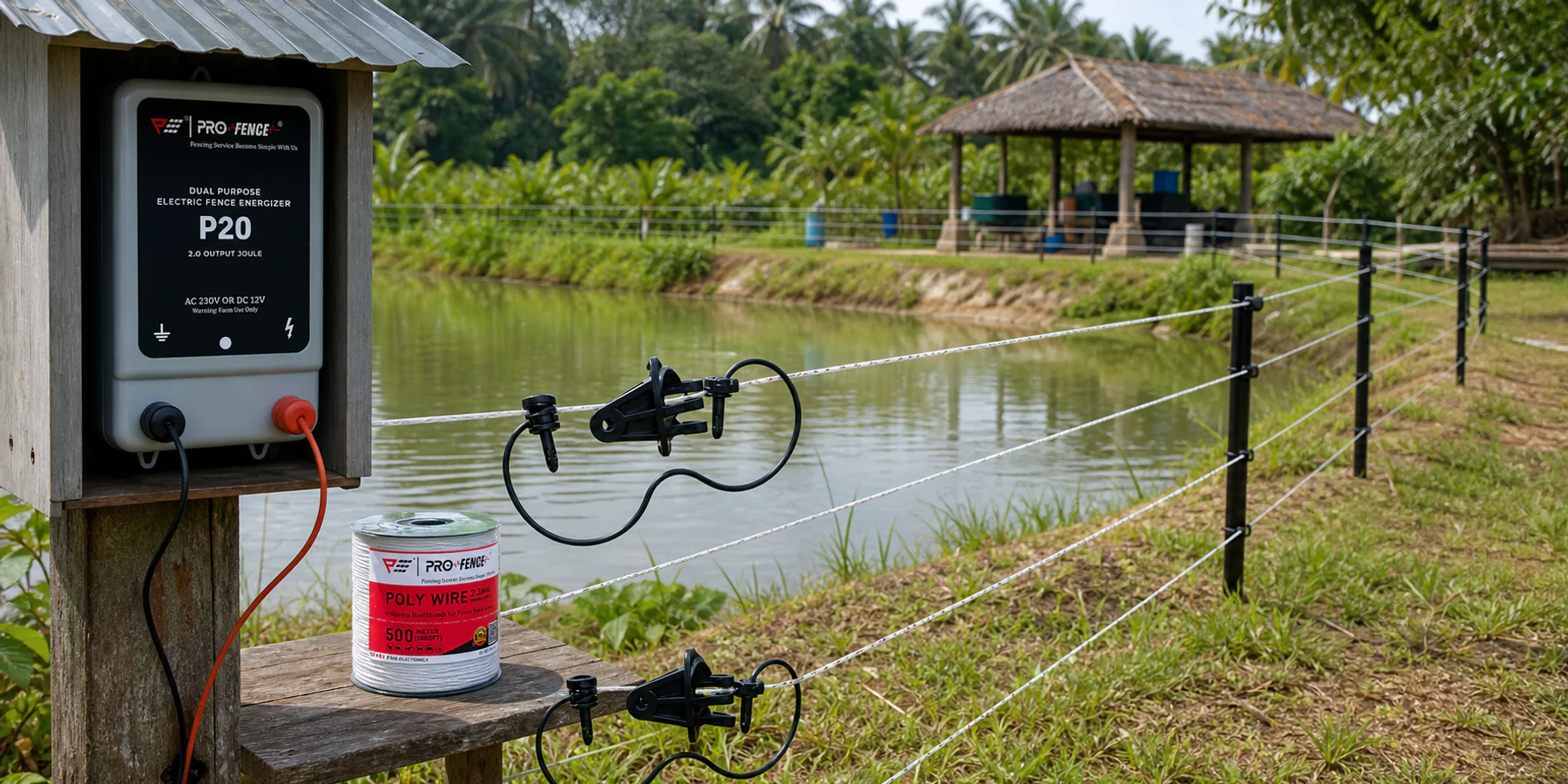
Electric fencing on Malaysian fish ponds protects against a different set of threats from crop farms: otters and monitor lizards (biawak) that raid stock from the water's edge, and theft or poaching, rather than large land wildlife rooting or grazing on plants. The fence typically runs low along the pond embankment rather than around an open field, using one or two strands positioned to intercept animals climbing up from the water or approaching along the bank at night. This is a genuinely different application from orchard or plantation fencing, and pond operators should think of it as embankment security rather than a scaled-down version of a crop-protection fence.
Why Fish Ponds Are a Different Fencing Problem
Most electric fencing content — including the rest of Pemall's farm guides — is about excluding land animals from planted crops across an open perimeter. Fish pond fencing solves a narrower, more specific problem: stopping semi-aquatic predators and opportunistic scavengers from reaching stock that lives in the water, along a boundary defined by the pond's own embankment rather than a fenced field edge. The animals involved move differently (climbing out of water, low to the ground, often at night), the fence sits in a permanently damp environment that ordinary farm fencing doesn't need to tolerate, and the "crop" being protected is invisible until it's already been taken. All of this changes the practical design of the fence compared with a durian or banana perimeter.
Freshwater aquaculture is common across Malaysia at both smallholder and commercial scale — tilapia, catfish (keli), patin and other freshwater species raised in earthen or lined ponds in Perak, Selangor, Johor and elsewhere. It's this earthen-pond, freshwater setup that electric fencing suits best; saltwater or brackish shrimp aquaculture operates differently and generally isn't where pond electric fencing is applied.
The Main Threats to Fish Ponds
Otters, particularly the smooth-coated otter found across Malaysia's wetlands and waterways, are one of the most persistent threats to stocked ponds. Otters typically move and hunt in family groups, and a group that finds an accessible pond can return repeatedly, taking a meaningful volume of stock over successive nights rather than causing a single one-off loss. They're strong swimmers and can climb embankments with relative ease, which is why they're a genuinely difficult predator to exclude with passive barriers alone — cases of otters bypassing conventional fencing to reach stocked ponds and ornamental koi are well documented.
Monitor lizards (biawak), especially the water monitor (Varanus salvator), are common around Malaysian waterways and ponds and are opportunistic scavengers of fish, fish eggs and smaller stock. They're large, strong climbers and diggers, capable of working their way through gaps in conventional netting or fencing that would stop smaller animals, which is part of why pond operators in the region have experimented with everything from purpose-built traps to fencing as a management tool.
Frequently asked questions
How is fish pond fencing different from crop farm fencing?
Pond fencing protects against otters, monitor lizards and theft rather than large land wildlife damaging plants, and it runs low along the pond embankment rather than around an open field. The equipment also has to tolerate a permanently damp, humid environment that crop farm fencing doesn't need to handle.
Do electric fences actually stop otters from raiding fish ponds?
They significantly reduce otter access when built with a low strand positioned to intercept animals climbing out of the water, though otters are capable swimmers and climbers, and some documented cases show otters bypassing conventional fencing, so a well-maintained, properly positioned fence matters more here than on most other applications.
What height should the fence strand be for pond protection?
A single low strand at roughly 10-15cm above ground level along the top of the embankment is the core design, with a second strand around 25-30cm often added on ponds with confirmed otter activity.
Does the fence need to go around the whole pond, including the water side?
Yes. Otters and monitor lizards can climb out of the water at any point along the bank, not just from the side facing open land, so the full embankment perimeter needs coverage.
How do I stop monitor lizards (biawak) from getting into my pond?
A low strand positioned at the embankment edge deters most monitor lizards from climbing in, though very large, determined animals may still find gaps, so combining fencing with netting over vulnerable nursery sections is common practice.
Does humidity affect electric fence equipment near a pond?
Yes, significantly. Pond-side conditions are harsher on equipment than dry farmland, so the energizer needs a weatherproof, elevated enclosure and corrosion-resistant fittings, with more frequent checks than a typical crop farm fence.
What size energizer does a fish pond need?
Pond perimeters are usually much shorter than crop farm boundaries, so most ponds need a modest-output energizer rather than the higher output required for large orchard or plantation fences.
Can electric fencing help prevent fish theft as well as animal predation?
Yes, an energized perimeter with a warning buzzer or alarm output deters people entering the pond area at night in addition to its role against otters and monitor lizards, which is a meaningful secondary benefit for ponds in less overlooked locations.
What wire type is best for pond embankments?
Polywire or poly tape suits pond embankments well, being easy to install along an uneven bank and simple to reposition if the pond layout changes.
Is this type of fencing suitable for shrimp or brackish-water ponds?
Electric pond fencing is mainly applied to freshwater aquaculture in earthen ponds — tilapia, catfish, patin and similar species. Saltwater and brackish shrimp operations generally use different pond management approaches.
How often should a pond fence be checked for corrosion?
More often than a dry-land crop fence, given the constant humidity and occasional standing water. Checking fittings and connections at least monthly, and after any flooding, is good practice.
Should the energizer be mounted at ground level near the pond?
No, it should be mounted on a stable, elevated, sheltered post away from flood risk, with cabling routed to avoid submersion when pond levels rise.
Do civets threaten fish ponds too?
Occasionally, though they're a less consistent threat than otters and monitor lizards specifically in pond settings.
Can I use the same fence for a pond and an adjoining crop planting?
It's possible if the pond sits directly alongside a fenced crop area, but pond sections should still use the lower strand height and corrosion-resistant fittings appropriate to the damp embankment environment, even where the fence connects to a drier crop-side run.
What's the biggest mistake pond owners make with electric fencing?
Setting the strand too high or too far back from the water's edge, which misses the point of pond fencing entirely, since the threat comes from animals climbing up out of the water rather than approaching across open ground.