
Basics
How Does an Electric Fence Work?
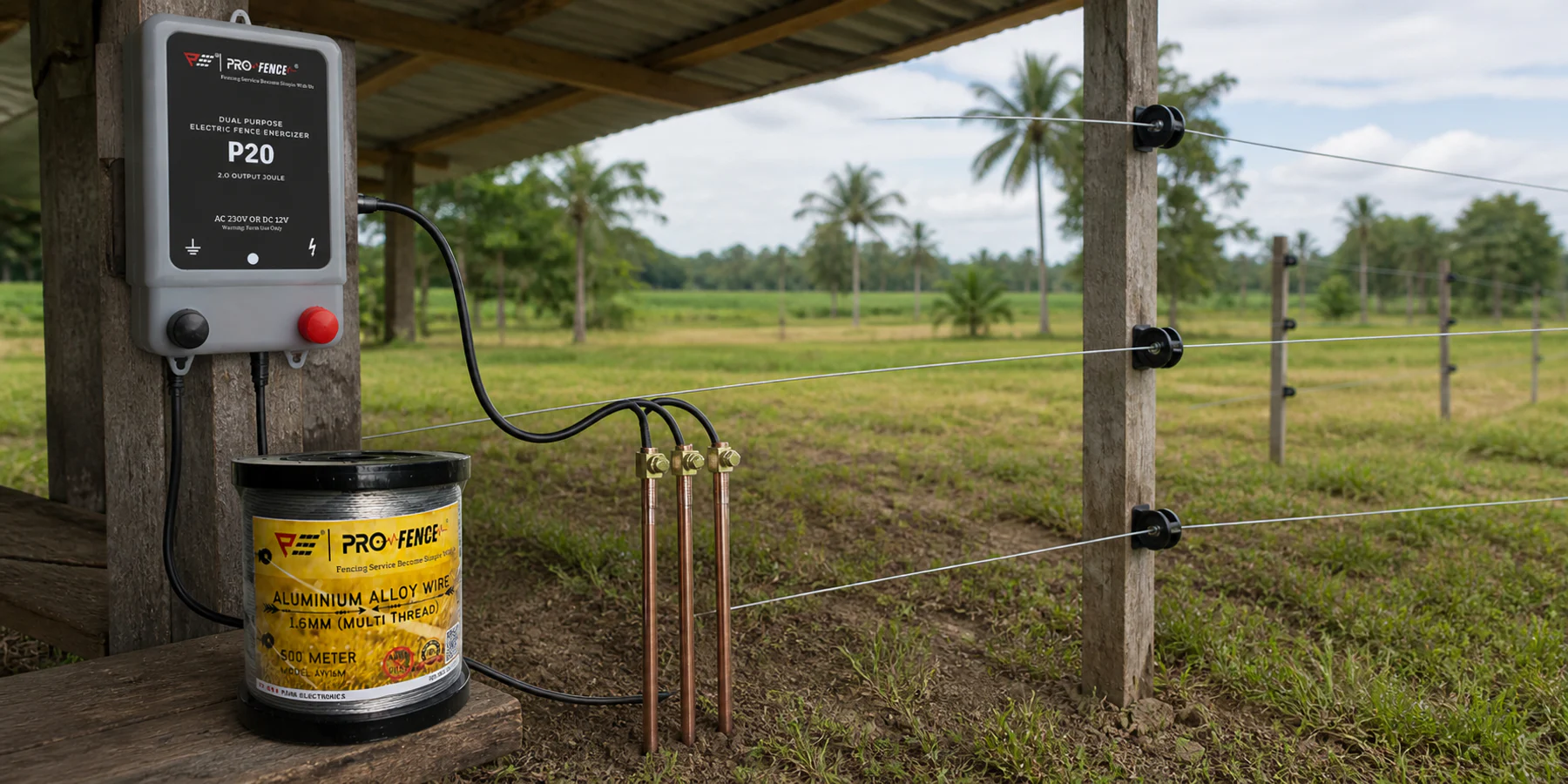
How Does an Electric Fence Work?
An electric fence works by sending a brief, high-voltage electric pulse — roughly once every second — down a bare wire, so that when an animal touches the wire, the pulse travels through its body, into the ground, and back to the energizer through an earth (grounding) system, completing an electrical circuit. The shock is sharp and memorable but extremely short in duration, which is what makes it an effective deterrent without being a serious hazard. Understanding this circuit — energizer, wire, animal, earth, and back to energizer — is the key to understanding why a fence performs well or poorly.
The Basic Circuit: Energizer, Wire, Animal, Earth
Every working electric fence is really just one electrical circuit with four parts in a loop:
- The energizer generates a high-voltage pulse.
- The pulse travels along the fence wire or tape.
- When an animal (or a person) touches the wire, the pulse passes through the point of contact, through the body, and into the ground through the animal's feet or hooves.
- The pulse returns to the energizer through the earth (grounding) system buried in the soil, completing the circuit.
If any part of this loop is broken or weak — a poor earth system, a wire touching vegetation and leaking charge, a loose connection — the fence will still technically be "on," but the shock felt by an animal will be much weaker than intended. This is the single most common reason a fence "isn't working" even though the energizer light is flashing normally.
How the Energizer Generates a Pulse
The energizer takes a low-voltage power source — mains electricity stepped down, a 12V battery, or a solar panel charging a battery — and uses internal circuitry to store energy briefly, then release it in a short, sharp burst along the fence wire. This burst is what creates the several-thousand-volt pulse felt on the wire, even though the energizer itself runs off a much lower input voltage. Between pulses, the wire carries no significant charge at all.
This pulse-and-pause pattern happens roughly once per second on most agricultural energizers. The "off" time between pulses is deliberate and important — it is the difference between an electric fence and a genuinely dangerous continuous electrical hazard.
Why Pulsed Current, Not Continuous Current
A continuous electric current strong enough to be felt through an animal's coat or a person's skin would be genuinely dangerous, because sustained current through the body — particularly across the chest — can interfere with muscle and heart function the longer it continues. A pulsed current avoids this because contact with the wire only delivers current for a tiny fraction of a second at a time, with a full second or more of no current in between.
This is why a properly designed fence energizer is not simply "a generator wired to a fence" — it is a purpose-built device engineered to deliver a specific pulse duration, pulse energy, and pause interval that has been established as an effective, low-risk standard for agricultural fencing. This is also why using an improvised power source instead of a genuine energizer is a serious safety hazard: it removes the pulsing behaviour that makes fence shocks survivable.
Frequently asked questions
Why does an electric fence pulse instead of staying on continuously?
Pulsing limits current exposure to a tiny fraction of a second at a time, which is what makes the shock safe rather than a genuinely hazardous continuous electrical current. This pulse-and-pause pattern is a deliberate, engineered safety feature of purpose-built agricultural energizers.
Is the shock from an electric fence dangerous?
For a healthy adult or animal, a properly functioning agricultural energizer delivers a startling but very short shock, not a sustained dangerous current. Caution is still warranted for young children, pets, and anyone with a heart condition or pacemaker.
What is the earth system for on an electric fence?
The earth (grounding) system returns the pulse to the energizer after it has passed through the animal and into the soil, completing the circuit — without it, the fence will deliver little or no felt shock even if the energizer is working correctly.
What does joules mean on an energizer spec sheet?
Joules measure the energy released in each pulse — broadly, how strong the shock is — and higher joule output generally supports longer fence lines, more wire strands, and heavier vegetation contact.
What does voltage mean on an energizer spec sheet?
Voltage measures the electrical pressure behind the pulse, which determines whether the pulse can push through resistance such as dry vegetation or coat thickness and still deliver a felt shock at the far end of the fence line.
Why does my fence feel strong near the energizer but weak at the far end?
This is usually caused by resistance along the line — undersized wire, corroded connections, vegetation contact, or simply too much fence length for the energizer's rated output — all of which cause voltage drop before the pulse reaches the far end.
Does soil type affect how well an electric fence works?
Yes. Moist, conductive soil (such as clay) generally supports a smaller earth system, while sandy or very dry soil conducts poorly and typically needs more or longer earth stakes to achieve the same performance.
Can rain or wet weather stop an electric fence working?
Rain itself does not usually stop a fence working, and can even improve earth conductivity, but rain-driven vegetation growth touching the wire is a very common cause of reduced performance afterwards.
Why do more wire strands sometimes weaken the shock?
Each additional strand adds more total vegetation contact and load on the energizer, so an energizer that is correctly sized for two strands may deliver a weaker shock per strand once expanded to four or five without an upgrade.
Is aluminium or steel wire better for conductivity?
Aluminium wire generally offers better conductivity for a given wire diameter, which makes it a common choice on long runs where voltage drop is a concern, while steel wire is valued for mechanical strength and cost.
Can a car battery or household power adapter be used instead of a proper energizer?
No. A genuine agricultural energizer is engineered to deliver a specific safe pulse duration and interval; bypassing this with an improvised power source removes the safety pulsing behaviour and creates a genuine electrical hazard.
How often does an energizer actually pulse?
Most agricultural energizers pulse roughly once per second, though this can vary slightly by model and manufacturer.
Does a longer fence need a higher-joule energizer?
Generally yes — longer fence lines have more wire (and therefore more resistance and more potential vegetation contact) between the energizer and the far end, so they typically need higher output to maintain an effective shock along the whole perimeter.
Why is my earth system important if my energizer is powerful?
Because the circuit only completes through the earth return — an underpowered or corroded earth system will bottleneck the whole system, no matter how strong the energizer's rated output is.