
Basics
Why You Should Never Electrify Barbed Wire
Why You Should Never Electrify Barbed Wire
No — barbed wire and an electric fence should never be combined into a single electrified barrier. Electrifying barbed wire (or running a live electric wire close enough that an animal or person can become caught on the barbs while in contact with it) turns a brief, startling shock into a prolonged, repeated shock, because the barbs snag skin, hide, wool, or clothing and prevent the normal reflex of pulling away. This entanglement risk is the core reason agricultural safety guidance in multiple countries specifically warns against — or restricts — electrified barbed wire, and it is the single biggest danger difference between this setup and a standard smooth-wire electric fence.
Why Mixing Barbed Wire and Electric Fencing Is Dangerous
A correctly designed electric fence relies on the shock being brief. An animal or person touches a smooth wire, feels a short, sharp pulse, and instinctively pulls back and away — contact lasts a fraction of a second. The entire safety case for pulsed electric fencing (see how an electric fence works) depends on that brief, self-limiting contact.
Barbed wire breaks this assumption. Its barbs are designed to grip and hold — that's the point of barbed wire as a physical deterrent. If that same wire is live:
- The normal escape reflex fails. A snagged hoof, leg, hand, or piece of clothing can't simply be pulled away, so instead of one brief pulse, the victim receives repeated pulses for as long as it takes to break free — seconds or minutes instead of a fraction of a second.
- Panic makes entanglement worse. An animal that is shocked while caught in barbs typically thrashes to escape, which usually drives the barbs in deeper and increases the number of contact points touching the live wire, rather than freeing it.
- Injury compounds with shock. Because barbed wire causes physical tearing/puncture wounds on top of the electrical pulses, an entangled animal or person can suffer serious combined trauma — cuts, torn flesh, and repeated shocking — where a smooth-wire fence would have caused only a brief startle.
- It's a known-enough hazard that it's often explicitly discouraged or restricted. Agricultural and animal-welfare guidance in several countries specifically advises against energizing barbed wire for this reason. Even where not explicitly banned, it goes against standard safe electric-fencing practice.
The Risk to Animals
Livestock (goats, cattle, sheep) and wildlife are the most common victims of electrified barbed wire, because they're the ones most likely to push against or lean on a fence line and end up snagged. An animal caught by a barb while the wire is live can be repeatedly shocked for an extended period, causing severe stress, injury from thrashing, and in serious cases, death — outcomes far beyond what a properly designed electric fence is meant to cause. This defeats the entire purpose of humane containment or deterrence, which relies on a brief, memorable — not injurious — shock.
The Risk to People
The same entanglement mechanism applies to people, and it's a particular hazard for children, farm workers doing manual fence work, and members of the public who may not expect a barbed wire fence to be live. Clothing, hands, or hair can catch on barbs just as readily as an animal's hide, and a person struggling to free themselves while being repeatedly shocked is at real risk of falling, prolonged current exposure, or panic-driven injury. Standard electric fencing safety practice assumes brief, non-restrictive contact — an assumption that electrified barbed wire directly violates.
Fire and Equipment Risk
Beyond the injury risk, energizing barbed wire is also harder to do safely from an electrical standpoint. Barb points can arc against posts, other wires, or where strands cross, and a fence with many closely-spaced metal contact points is more prone to shorting and to localized heating at those contact points than a clean, insulated smooth-wire run. This adds nuisance faults and, in dry vegetation conditions, some fire risk at chronic short-circuit points — on top of the personal injury concerns above.
What to Do Instead: Combining Physical and Electric Fencing Safely
Barbed wire and electric fencing can still be used on the same boundary — the safe way to do it is to keep them as two separate, non-contacting systems rather than energizing the barbed wire itself.
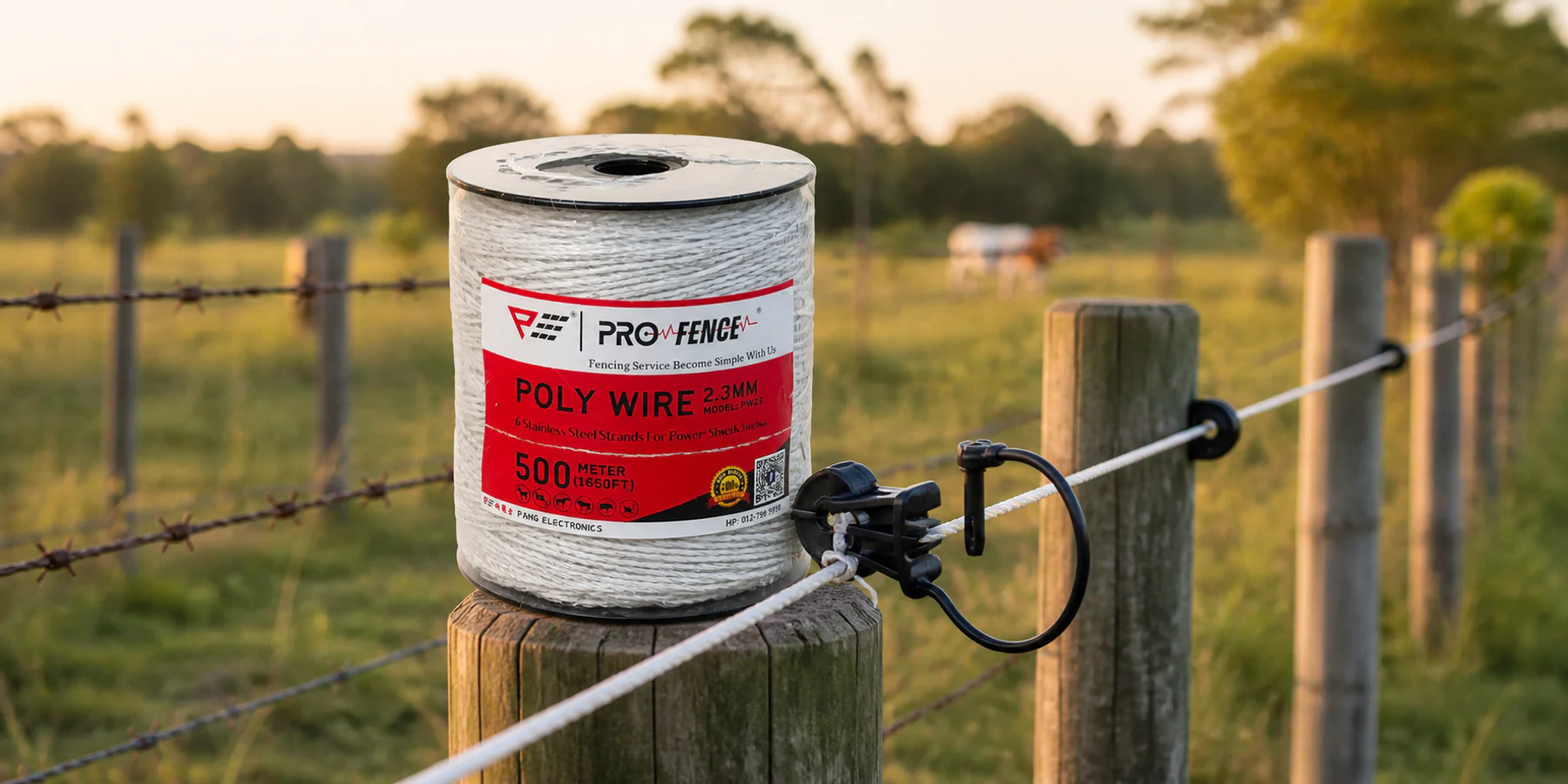
- Run electric wire on separate offset brackets. Add insulated offset arms or brackets to the same posts (or a parallel line of posts) to carry a smooth, dedicated electric wire strand well clear of the barbed wire, so the two never touch and an entangled animal is never also in contact with the live strand.
- Keep the barbed wire fence unpowered. Let the barbed wire do its job as a passive physical barrier, and let the electric strand — on its own smooth wire, at its own height — do the psychological deterrent job. See what is an electric fence for how the two approaches differ.
- Use a genuine offset distance, not just an extra insulator, so that an animal pressing against or caught on the barbed wire cannot simultaneously bridge to the electric strand.
- Inspect regularly for sagging wire, damaged insulators, or a strand that has drifted into contact with the barbed wire below or above it — this is exactly the fault condition that turns a safe layout into a dangerous one. See our maintenance guide for a routine inspection schedule.
- Post warning signage wherever a boundary carries a live electric strand near an area the public, workers, or children may approach, regardless of whether barbed wire is also present.
- If you're unsure whether an existing installation has the two wires in contact anywhere along the run, treat it as unsafe until inspected — walk the full fence line checking for contact points, sagging, or failed insulators before assuming the layout is safe.
Frequently asked questions
Is it dangerous to electrify barbed wire?
Yes. Barbed wire's barbs can snag skin, hide, wool, or clothing, which prevents the normal reflex of quickly pulling away from a shock. Instead of one brief, startling pulse, an entangled person or animal can receive repeated shocks for an extended period, which is far more dangerous than a standard smooth-wire electric fence.
Can I combine barbed wire and electric fencing on the same boundary?
Yes, safely — by keeping them as two separate systems. Mount a dedicated smooth electric wire on insulated offset brackets, clearly clear of the barbed wire, rather than running current through the barbed wire itself.
Why is entanglement the main danger with electrified barbed wire?
Because it removes the safety assumption that an electric fence shock is brief and self-limiting. A caught barb holds the person or animal in continuous contact with the live wire, turning a startling pulse into a prolonged, repeated shock.
Is electrified barbed wire legal?
Rules vary by location, but agricultural and animal-welfare guidance in multiple countries specifically discourages or restricts energizing barbed wire because of the entanglement and injury risk. Standard safe-fencing practice is to keep barbed wire unpowered and run a separate smooth electric strand instead. Check local regulations for your area before installing any electrified fencing.
Does electrified barbed wire pose a fire risk?
It can contribute to one — barb points and multiple closely-spaced metal contact points are more prone to arcing and localized short-circuit heating than a clean smooth-wire run, which adds fire risk in dry vegetation conditions on top of the injury concerns.
How do I safely add an electric deterrent to an existing barbed wire fence?
Fit insulated offset brackets to the same posts (or a parallel post line) to carry a separate smooth electric wire strand at a genuine offset distance from the barbed wire, so the two never make contact, and inspect the run regularly to confirm they stay separated.
What should I do if I find an existing fence where electric wire is touching barbed wire?
Treat it as unsafe immediately — de-energize the fence line if possible, and correct the contact point (re-tension, reposition, or add offset insulators) before re-energizing, since this is exactly the fault condition that causes entanglement shocks.
Are animals more likely to be injured by electrified barbed wire than a plain electric fence?
Yes. Beyond the repeated-shock risk from entanglement, barbed wire also causes physical cuts and puncture wounds, so an animal caught while the wire is live can suffer serious combined trauma that a standard electric fence is not designed to cause.